
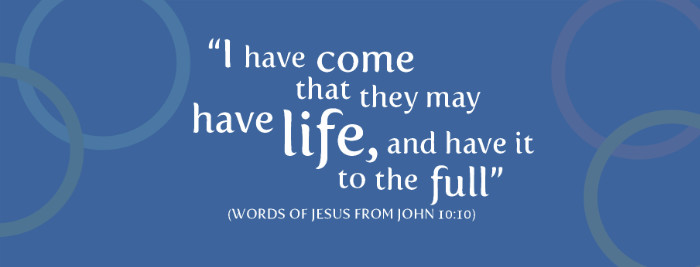

 Telling a better story of Britain
Last week, at a meeting of the College of Bishops, we were challenged by Professor Luke Bretherton, Director of the McDonald Centre for Theology, Ethics, and Public Life at the University of Oxford, with a simple but searching question: “What story do we tell of Great Britain?” For generations, we have told a story of steady progress. Yet today we find ourselves in a post‑progressive moment. We can no longer assume that life is always moving forward; so much of our national and international experience is now shaped by fear, uncertainty, and rapid change.
For some of us—especially those of my generation—this brings a deep sense of loss for what once seemed secure. For younger generations, “progress” is not something remembered, but something they have never known. Whatever our age or experience, we find ourselves in need of grace.
Of course, in another sense, this is not entirely new. Our current moment invites us to look honestly at our past as well as our present. Throughout our history there have been what some call “sacrifice zones”—communities and places that have carried the environmental and social costs so that others might prosper. Britain’s achievements in industry and innovation sit alongside the realities of exploitation, slavery, and profound inequality. Our story has always contained both light and shadow.
These tensions feed into much of our present political conversation, which often swings between two opposing narratives. One tells a story of shame, seeing Britain as permanently tainted. The other tells a story of glory, imagining a once‑perfect nation that must be recovered—an approach that risks turning the nation itself into an idol. Neither story reflects the Christian faith.
Our story, as disciples of Jesus Christ, is shaped by His life, death, and resurrection—by creation, fall, and redemption. Britain is neither wholly evil nor wholly pure, but a fallen community capable of renewal. It is a place marked by both disgrace and grace, held together by law, peace, and the possibility of God’s healing work.
This is the story we are called to tell: a story rooted in God’s love, placing love of God and neighbour at the heart of public life. It resists dividing society into winners and losers and instead seeks a shared life where all can belong. The Christian vision sees our world not as a set of possessions to guard, but as gifts to receive and to share. Standing up for others—especially the vulnerable—is, in this sense, a profound and faithful patriotism.
So what story do we, the Church of England, tell about the nation in which we live and to which we belong? I believe it is neither a story of uncritical glory nor one of despair, but a story of loyalty—a sacred loyalty shaped by duties of care, the pursuit of the common good, and hope in Christ. It is a story that invites us to ask how we practise loyalty with justice.
This is a story that has never in my lifetime been in more need of telling.

 News Hub






Well said.
Love the reference to loyalty , ‘sacred loyalty shaped by duties of care’. Thank you for this. Much appreciated.
Very well said, Bishop Robert. You speak to the heart of the issues. Thank you