
Meysey Hampton has been voted by the Telegraph newspaper as the best primary school in the country, based on national assessments that measured factors like academic performance and class sizes.
We went to visit the school to find out what stood out to us. Even more striking than the excellent academic results, was the warm, positive, and close-knit environment. Faith and community forms a big part of school life, and small class sizes ensure that every child is well-known and supported by staff. Despite the modest size of the school site, the grounds are rich with greenery and provides an outdoor learning space that’s calming yet inspiring.
The school’s three main aims are to be aspirational, welcoming and enriching. Claire Lewis, Headteacher at Meysey Hampton, said:
“We want everyone – staff and pupils – to be the best they can be. We’ve spent a lot of time thinking carefully about our school culture and what it means to live out our values day to day. It’s not just about high standards, it’s about helping each child take small steps and knowing that they’re supported at every stage. Everyone here plays a part, from the teachers, to the office staff, to the pupils. It’s a real team effort.”
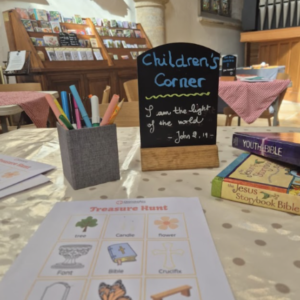
The school has made the most of their display space, showcasing learning, pupils’ reflections, the vision for the school, and examples of faith in action.


The school holds collective worship every week, and there are always opportunities for pupils to reflect, pray, and share moments of gratitude. There are prayer corners in every classroom, and each class has a prayer tree that offers space for written prayers. Pupils take turns leading class and whole school worship.
“The staff and pupils come together whether they have faith or not,” said Claire. “When we worship, we ask children what’s important to them and what has made them proud that day.”


 The Revd Catie Watson, Curate at the South Cotswolds Team Ministry, plays an active role in the school’s spiritual life.
“The church and school work hand in hand,” she said. “I visit to lead collective worship, and once a month the children come to church. Faith is everywhere here – you see it in action in every classroom. The children really live the values they talk about.”
Each term focuses on a Christian value, such as friendship, perseverance, peace, or compassion. Pupils take turns in pairs to discuss stories that illustrate these themes and relate them to their own lives.
 Laila said: “Every term we have a new value. This term it’s friendship. We read stories and talk about what friendship means.”
Abigail, led the worship on friendship that week. She said: “We chose the book ‘Ruby’s Worry’, about a girl who feels worried until she meets a friend who also has a worry, and then the worry goes away.”
 The school encourages aspiration from an early age. Some pupils shared their ambitions for the future: Harper, age 10, wants to be a marine biologist because she loves fish; Izzy, age nine and three-quarters, wants to be a pharmaceutical scientist to help people feel better; and Georgia, age seven, hopes to be a professional football player.
At the start of the school year, older pupils become a ‘buddy’ to the reception children who have just joined the school. They meet the parents of their reception buddy at the start of the year, and they are tasked with being a companion. They walk their buddy to worship and offer support throughout the year.
Harry said: “We look after our buddies and show them how to play kindly and include everyone. We want to be good role models.”
 His classmate Reggie said: “We help our buddies if they have a question or a problem. It feels good to show them how to be kind and friendly.”
The school’s natural surroundings also play a key role in its culture. Pupils enjoy outdoor worship, outdoor lessons, and forest school activities.
Claire said: “Having greenery and space around the school is really important. We use every part of the site for learning and reflection.”
 Pip said: “I like forest school because we can learn outdoors and not be in a classroom all the time. We’ve made nettle tea and smores, and we use outdoor tools to make things.”
Mr Tubb, a teaching assistant, said: “The environment children are in is such an underrated part of school life. The gardens, plants and mosaics make the school a calm and welcoming place, and that supports learning.
“The small classes mean every child knows every adult. It’s a tight-knit community, and that trust helps them learn. Children will often approach staff at playtime just for a chat, which shows how comfortable they feel.”


Catie summed up the partnership between faith and education: “I see life in all its fullness here. The children’s curiosity, creativity and kindness come from a deep understanding of the Christian values they live every day.”


→ Read the full rankings from The Telegraph

 News Hub