
During Black History Month this October, we are pleased to share a thought-provoking blog by Trevor Henry, a churchwarden and worshipper at St James and All Saints Gloucester. In this blog, Trevor reflects on the important and often challenging subject of white privilege.
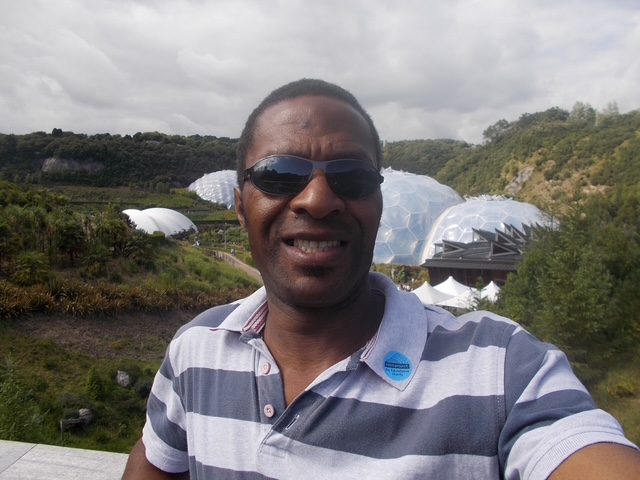
“White privilege is often misunderstood, dismissed, or denied, especially by those who believe Black people ‘play the race card’ or dwell too much on a past that is ‘over 200 years ago’.
“What these arguments fail to address is that these are foundations and drivers of modern racism are sometimes dressed in subtlety. Slavery legacy continues to shape and encourage unconscious bias, discriminatory behaviour, that affects the everyday experiences of people of colour.
“White privilege is the benefits or passive advantages by virtue of being white, the unspoken advantages that operate quietly, benefiting those who rarely have to question it.
“To describe white privilege, I picture a Black person looking up at a translucent glass ceiling with the hope of enjoying the full splendour of the sky and possibly reach out to it. The Black person can see the world above, but finds it difficult because of the barrier in place, making it impossible to enjoy the full benefits of a sky without the glass ceiling .
“Racism exists everywhere: in Africa, Asia, Europe, and within communities themselves. The media has long controlled the narrative, often through a white lens. Rewriting history through all shades of experience would be a powerful step toward education and equality.
“Challenging racism – whether blatant or subtle – is essential. My own experiences in white spaces have shown how unconscious bias sustains prejudice. Comments meant as ‘jokes’, like calling me ‘jungle juice’ or saying the room ‘got dark when I entered’, were not funny; they were racist. Even being told I ‘don’t come across like a Black man’ reveals the stereotypes people carry.
“Reni Eddo‑Lodge, the award‑winning London journalist, explores these ideas powerfully in her book Why I’m No Longer Talking to White People About Race. She describes three moments that shaped her thinking. First, during her first week at university, she encountered a white student who showed complete lack of interest in Black history – an early reminder of how easily Black experiences are dismissed. Second, she compared her daily cycle commute across London underground to the constant obstacles Black people face navigating society. Third, she recalled an incident in a Caribbean takeaway where a Black server gave a white customer the ‘scraggy pieces’ of chicken while saving the better portions for her. Reni felt uncomfortable, and she used the moment to illustrate a deeper truth: the white customer’s experience was trivial, in relative terms whilst the Black person denied housing or a job due to unconscious bias racism suffers life‑hindering and affecting consequences.
“Sports and entertainment often reward on merit, yet Black success is still reported through negative stereotypes. Black stars deserve the same fair press as their white counterparts.
“The Black Lives Matter movement a few years ago awakened many of our white brothers and sisters to their own conscience and responsibility. Silence can look like complicity, and more people are now asking how the narratives can be changed. The rise of Black voices should not be taken as a threat. It is an opportunity to ask difficult questions of a world long shaped by whiteness. Even proverbs are influenced by racism as reflected in an old saying ‘the whiter you are, the closer you are to heaven’ – a phrase that exposes how deeply racial hierarchy has been embedded.
“It is important for our white brothers and sisters to check why questions are asked in certain ways and stop to check if they would have posed the same question in a similar way to a white person. Ultimately, white privilege is not an accusation – it is an invitation to look closer to see clearly. Viewing one another as God’s children, without colour shaping perception and judgement, leaving room for love, tolerance, peace, and shared humanity.”

 News Hub