
A gathering exploring how churches can manage their churchyards for biodiversity has highlighted another important role these spaces can play – bringing communities together.
More than 20 people from ten churches across three deaneries met at St Stephen’s, Moreton Valence for the latest in the ‘Managing Our Churchyards for Biodiversity and Nature’ series.
While the gatherings provide an opportunity for churches to share ideas, successes and challenges, one recurring theme is the way churchyard projects can attract people from beyond the congregation and offer a way for members of the local community to become involved even if they have little connection with church life.
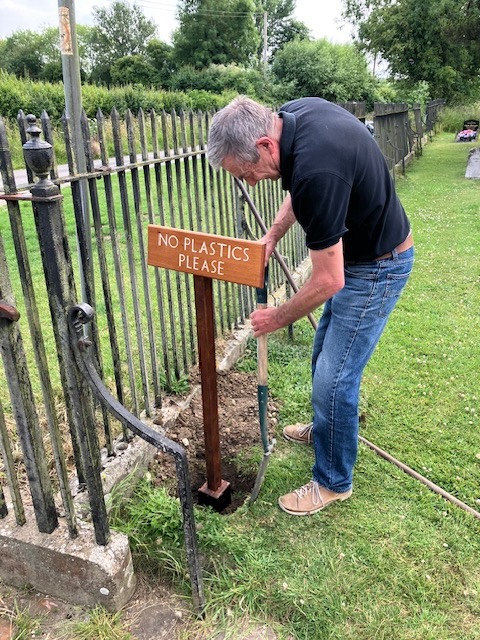
At St Stephen’s, this is already happening. Churchwarden Sally van Eeghen said: “We certainly have quite a few people prepared to help with churchyard tidies who are rarely, if ever, in church, but are residents in Moreton Valence and walk their dogs in Church Lane. For example, we have a very good non-churchgoing man, a long-term resident, who helps a lot with strimming and has also made our wooden signs.
“The churchyard provides an accessible way for people to support the presence of the church in their community without necessarily becoming involved in church services. It also gives people a chance to meet and work with other residents in Moreton Valence – a very small community where there is no pub, school, shop or village hall.
“The presence of the building and the churchyard is definitely valued. The people in the village seem to want the church to stay open. We find all sorts of people sitting in the churchyard enjoying the lovely surroundings.”
The recent gathering also demonstrated that a church does not need extensive facilities to offer a warm welcome or inspire others. Jennie South, Stroud Deanery Eco Ambassador and organiser of the ‘Managing our Churchyards for Biodiversity and Nature’ event, said: “Hosting a crowd to an afternoon such as this, in a church without water or ‘facilities’ might seem tricky, but Sally and St Stephen’s were not deterred.
“The feedback from those who attended showed that the welcome and the surroundings made a lasting impression:
‘We came away thoroughly inspired, particularly by your handmade wooden signs and we were most impressed with the photographs and notes which form part of the churchyard management plan. Sally, who lives next door gave us the most wonderful tea and the opportunity to stroll in and be inspired by her garden. Our group will be having a chat to see what we can implement in our own churchyard’.”
The experience at Moreton Valence is echoed by other churches involved in the biodiversity network.
Jennie said: “At Holy Trinity, Wickwar, the church is working with a village environmental group on small projects such as composting at the cemetery. The environmental group members are not regular members of the congregation. The church also welcomes the local primary school and Scout troop for nature walks and bat watches.
“At St Paul’s, Whiteshill, the churchyard is one of four public village spaces designated as ‘spaces for nature’. A recent evening Bioblitz brought villagers together to discover the wildlife living there, while much of the ongoing churchyard work is now carried out by people from outside the congregation.”
With nature knowing no boundaries, these examples demonstrate how churches, parishes, deaneries and local communities can work together, building relationships and sharing in the common purpose of caring for creation.
For churches looking to take the next step, the Eco Church Land and Nature category offers a practical framework for exploring how churchyards and other land can be managed to benefit both nature and the wider community. Find out more →

 News Hub