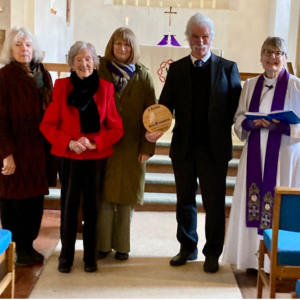
This month Barrie Voyce, Senior Youth Connector, is thinking about the transition points in the lives of children and their families.
Currently my youngest daughter is working towards he A-Levels, and praying for the grades to get to the University she’s desperate to study at, and my eldest is looking at flats as she prepares to move out of home. These are both exciting and anxious times for them, but also destabilising for me and my wife. It seems like throughout the entirety of parenthood we’ve been facing one change or another: Starting pre-school, starting Reception, my wife going back to work, moving to secondary school, beginning GCSEs, going to college, and now these changes. To say that the Voyce household is in a semi-permanent state of flux would be a bit of an understatement!
In children and youth ministry we can often focus on the move from primary school to secondary school. Its an understandable thing to do – as an 11 year old the change is considerable, and there is real potential for things – life and education – to derail if it isn’t smooth. Its also an area where we, as churches, can feel the impact too. By and large we have excellent relationships with primary schools, church and otherwise, and therefore are active participants in the lives of children. This is much less the case with secondary schools, particularly if you are in a Parish with no local school. We can feel that the children are moving away and leaving us too.
With the summer term on the horizon, and the flowers of spring emerging, perhaps we need to take a fresh look at “transition” for 2026 and beyond. Without losing the significance and importance of yr6 to 7, maybe we can think broader and deeper. We can consider those other moments of change, and the whole family, not just the child. Before we launch into the list of practical ideas (don’t worry, it is coming) let’s first think about the culture and principles about this stuff.
In our research last year, parents frequently mentioned the mental load of parenting, including constant planning and decision-making. They liked the idea of having access to support during difficult times, someone to talk to, practical advice in managing these challenges, and access to quiet spaces for reflection and planning. It strikes me that these are all things our churches and congregations can provide with love and grace. Furthermore, if we are able to be there early in the child’s life, the relationships that develop with the family will grow and develop throughout their lifetime, and people will be likely to seek us out again when things are a challenge.
Facing changes like these are common to everyone, unlike some of the other challenges people might meet. That shifts the balance of power so that we are simply there alongside them, not helicoptering in as “experts” – sure, my kids are grown up now, but I can remember what it was like when they were toddlers, and show empathy and care to others coming along now. This is really important as, again in the research, parents worried about being “judged” by Christians. As one person put it:
I wonder if I’d feel out of place, especially if I’m not religious or don’t go to church. I’d want to know I wouldn’t be judged, and that I could take part without needing to believe or sign up for anything. Feeling genuinely welcomed like I belong there even if I’ve never been to church — would make a big difference. It’s easier to ask for help if the space feels relaxed, warm, and open to everyone.
So, what could we do?:
- Don’t forget the parents and other family members
- Start as early as possible – both in age (toddlers going to pre-school) and in the year (parent’s will be thinking about change much earlier than we imagine)
- Ask simple questions like “How are you feeling about X going to big school?”
- Create spaces for parents – perhaps you could open church up after the school run, or before pick up time for parents to come and experience peace
- You don’t need to be an expert in the education system, instead be an expert in showing love and empathy
- Join in with what’s happening – leavers’ assemblies or services, induction visits, awards nights. Or if they don’t exist, hold your own.
- Don’t conform! – just because they change school at the end of yr6 doesn’t mean we have to. Youth Groups for yr5-8 are a great way to provide consistency through change
- Invite older children and/or their families to come back and be part of the next cohorts’ transition process
- Do things during the summer for families to stay in touch with each other and you
- and above all, pray!
Whatever we do, the perspective of ‘adventure’ is helpful. Yes, there will be challenges as young people move through life but also great opportunities. Try to encourage an attitude of making a positive difference, rather than just keeping afloat. The hope, peace and courage which young people can find as they walk with Jesus will be so valuable.

 News Hub