

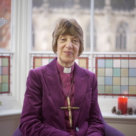
Parental imprisonment is often discussed from the perspective of the parent, but what about the children left behind? In this episode of Holding the Key, Bishop Rachel, the Bishop of Gloucester and Anglican Bishop for Prisons in England and Wales, is joined in conversation by Sarah Burrows, founder and CEO of the charity Children Heard and Seen.
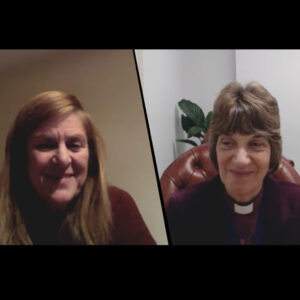
Together they explore the often-overlooked impact of parental imprisonment on children, particularly those living in the community who may have little or no relationship with the parent in prison.
Speaking on policy reform, Sarah tells us, “We know where every Labrador is in the country, but we don’t know where every child is who has a parent in prison.”
Sarah emphasises that support systems leave many children invisible, unsupported, and unable to process feelings of shame, stigma, grief, or confusion. The conversation highlights how children’s experiences vary widely — even within the same family. Sarah says, “Parental imprisonment is often talked about as one thing — but children need very different things at different times”.
Both argue for policy reform, better training for schools, and a more curious, compassionate public response — one that recognises children as innocent parties experiencing what Sarah describes as an “invisible punishment”, and that listens carefully to what children themselves say they need.
Listen now:
NB. An AI tool was used to separate the conversational voices in this transcript.
Bishop Rachel:
Hello, my name is Bishop Rachel. I’m the Bishop of Gloucester, but I’m also the Anglican Bishop for prisons in England and Wales. And this is the next in the podcast series of Holding the Key, a series of conversations to unlock the door to doing prison differently. And I’m delighted today to be joined by Sarah Burrows. Sarah, welcome. Please do just introduce yourself.
Sarah Burrows:
I’m Sarah Burrows. I set up and now run Children Heard and Seen. It’s a charity supporting children with a parent in prison, but it’s community focused, so it’s supporting children in their communities when they have a parent in prison.
Bishop Rachel:
I mean, what you do, Sarah, is absolutely inspirational. And this comes from a very different angle than we’ve approached these podcasts from before. And it’ll be wonderful if you could just begin by outlining the scope of parental imprisonment today, just to give us a little thumbnail sketch.
Sarah Burrows:
I think from the perspective of Children Heard and Seen, it’s about supporting children with a parent in the community. And there’s often a push about supporting children to keep the relationship, or supporting the person in prison to have the relationship with the child. But for the children that don’t have a relationship with the parent in prison, whether it was the offence type, or whether they were a victim of the offending themselves, or whether the relationship had broken down prior to going to prison, children aren’t actually able to access support.
So it feels important for children to be able to have others to meet and discuss their feelings, and also to have specialist workers to talk to about their feelings. A lot of children commonly experience shame, stigma and secrecy about having a parent in prison. And it’s really important for children to be able to have the opportunity to talk about and process those often complicated and conflicting feelings about their parent being in prison.
Bishop Rachel:
Yes, and I was really struck when I first met you and heard about Children Heard and Seen that what really struck me is so often when we’re talking about children with a parent in prison, we’ve come at it from the angle of the parent — the person who is in prison. And you are so wonderfully persistent in saying we have to start from the children’s perspective. And as you have so well highlighted, that will include children who want to have contact with their parents in prison, and those who don’t.
Sarah Burrows:
Yes, definitely. And obviously some children want to have contact with the parent in prison, but there’s also the question of whether they actually want to visit, what’s in their best interest, and what they want to do. And often children, when they’re older and adolescents, talk about wanting to be able to see their friends and not having to go and visit, but feeling quite responsible and guilty about doing that.
There are so many variables for children. And it’s always about putting the child at the centre of it — what is in the best interest of the child? And also recognising that in sibling groups, it might be exactly the same situation, but children experience it differently from their siblings. And it’s about having the opportunity to process and talk about it, rather than things being shrouded in secrecy.
Bishop Rachel:
Yes, and I think that’s very child-centred. It’s not even assuming that every child in the same family will feel the same way. One question we get asked a lot is how many children are affected by this, and I’m always struck by some of your reflections on this.
Sarah Burrows:
So the Ministry of Justice put out figures, I think at the beginning of this year — I’d have to check — but I think it was around 192,000 children they thought were affected by a parent in prison. But it was an estimate based on prison figures, not on actually knowing who the children are. So it’s still an estimate. We don’t actually know how many children are impacted or affected.
And one of the things that often surprises people — and we talk a lot about this at Children Heard and Seen — is that because we don’t know who the children are, we come across situations where children are living on their own without an adult taking care of them. There’s an assumption that services know and are picking up these children, but they don’t.
We’ve had quite a lot of incidents of children living on their own — 14, 15 years old — because there isn’t a mechanism to identify and support them. Most people are really surprised by that and think, well, no, this can’t be possible.
They made that really powerful film — was it last year or the year before? Time goes so quickly — which showed that experience of children. And you have a phrase, if I can call it that, which you often say, which is that we know exactly where every Labrador is in the country.
Bishop Rachel:
Yes.
Sarah Burrows:
In terms of registration, knowing that, understanding that, and people being interested in that. And actually these are children — children who are so, so, so much more important. And there’s either a lack of interest, or an assumption that this information is known.
When people stop and think about it, they say, surely we would know, or surely children would be offered support. And yet we’re currently supporting over 450 children who haven’t had support before. Some have waited years.
We’ve had some pretty awful situations where children have experienced traumatic processes, but because it’s their parent who committed the offence, they haven’t been able to access support. And I think there’s an assumption that we would want to support them and ensure children have a voice.
Bishop Rachel:
Yes, certainly when I say to people, do you know that today the government knows exactly where every Labrador is because they’re registered, but we don’t know where every child is who has a parent in prison, people find that deeply shocking — for all the reasons you’ve just said. They assume we do know, and that children can access support.
You mentioned earlier that sense of children feeling ashamed. I think it’s you who’s often talked about the idea of an invisible punishment for children.
Sarah Burrows:
Yes, definitely. I think, you know, it starts right from the beginning. The shame, secrecy and stigma can begin from when the parent is arrested. Children can witness the arrest, and a significant number of the children we support have witnessed that. And how traumatic that is — seeing your parent being arrested, being woken up at dawn, having to experience that.
There’s that absolute deep worry and concern for the parent. Then there are the court cases — how long they can take, the uncertainty, not knowing what’s going to happen. Children talk about hushed whispers and not being told what’s going on.
Then when the parent is sentenced, it can be in the media. And particularly now with social media, reporting goes onto social media and people comment underneath. Children need support through that process — understanding what a trial is, what might be said, that some things might not be true. Parents can be vilified for their crimes, and for a child, that’s still their parent — someone they love and care about. So there are lots of mixed and conflicting feelings.
And then there’s the sentence itself. Children often imagine what prison is like from television — things that aren’t true — and they want to understand what it will be like, and what visiting would be like. It’s just not talked about enough with children.
We would really like to see schools trained so that all schools have a designated safeguarding lead who is able to say to a child, “I’m here if you want to talk — and it’s okay if you don’t.” Being that safe person at school is really important, because children don’t often share this or want to tell their story. Schools often find it difficult to have these conversations or even to ask.
They may have seen something in the media. I remember hearing a child talk about not being invited to a birthday party because their parent was in prison, and all the feelings around that. The child saying, “I’m not the one who committed the crime.” And yet sometimes it’s a parent they don’t want a relationship with, and sometimes it’s a parent they deeply care about, but they still feel as if they are the ones who’ve done something wrong.
Children draw pictures of what they think a prison cell looks like, what they imagine their parent is experiencing — all of that matters.
Bishop Rachel:
Certainly from having spoken with you several years ago now, whenever I go into schools, I always talk about this issue. And I’m also very clear when I’m with a gathered group of children, and I’m asked about my role as Bishop to prisons, that I’m always aware there could be a child in the group who has a parent in prison.
So how I frame my language, how I talk about how people are cared for in prison — even though we know that’s challenging — all of those things are important. And exactly as you’ve said, how do we better train teachers and those who work in schools to be able to talk about this and support children?
I think every school I’ve been in has either an awareness that a parent is in prison, might be in prison, goes in and out of prison, or — as I had recently — being aware of a parent coming out of prison and coming back home and not really knowing how to support the child.
So what would you like to see in an ideal world, Sarah? What sort of training and input would you like to see in schools?
Sarah Burrows:
I’d like, first of all, there to be a mechanism to identify children with a parent in prison. When I worked for the local authority initially, there was Operation Encompass — although I understand it’s done a bit differently now. When the police were aware of an incident of domestic abuse, it would come into the local authority, and the local authority would see which school the child was at and let the school know — not about the incident itself, but that the child could have witnessed it.
I think it should be similar when a parent goes to prison. There needs to be a mechanism to identify children. Operation Paramount in the Thames Valley area has done this, and it would be really good to see that rolled out, so schools are informed rather than police officers knocking on doors.
So first of all, that identification. But then if schools are aware, what happens next? There’s no point just knowing. Schools need the tools to understand what to do with the information — how to create a safe space for the child.
We, and many other organisations, run training around this — understanding what might happen, what a child might want to say, and where children are developmentally. But ultimately, it’s about creating that safe space.
If the designated safeguarding lead is aware, it could also lead to peer support. We’ve supported schools to set up peer support groups, particularly in large secondary schools. Sometimes they’ve done it more broadly — not just parental imprisonment, but sibling bereavement and other issues. It’s about being there.
And it’s about protection too. Children talk about the amount of bullying they experience. If schools are aware, they can intervene and provide safety. That’s vital.
Bishop Rachel:
You say “many other organisations,” but I don’t think there are many. Obviously there’s Pact, who work with families, but you’ve really led on this and been a persistent advocate.
You and I often talk about legislation and policy reforms — what we’d like to see in Parliament. We’ve talked about identification, and you’ve highlighted how Thames Valley Police have done this well. Are there other policy reforms you’d like people — policymakers, advocates — to focus on?
Sarah Burrows:
First and foremost, it’s identification and support. Carrie McCarthy, just before the general election, introduced a ten-minute rule bill on parental imprisonment. It was absolutely child-centred, focused on children in the community — whether they had contact with the parent or not.
Then, the following day, a general election was called. The commitment appeared in the Labour manifesto, and we’re now eighteen months on. I really hope that once identification is in place, other work can follow.
Until we know who the children are — how many there are — it’s very difficult to address wider issues. Once that’s in place, we can look at different cohorts and specialisms.
Recently, for example, we’ve been working with two young men — originally teenage boys — who were the second and third children we supported. Their father killed their mother. We’ve been looking at the impact now they are young men, and we’ve made a film called Children Behind the Headlines, focusing on children impacted by domestic homicide — when one parent kills the other — and what that means for loss and safety.
There are so many aspects of parental imprisonment. Grandparents caring for grandchildren. Children with mothers in prison. Children whose parents are serving long sentences — ten years plus for men, eight years plus for women. Those are often high-profile cases covered in the media, and children have to internalise that.
We’re increasingly supporting children whose fathers have committed sexual offences and are serving custodial sentences. The parent carer has their own loss and grief, and needs support too — not just the child.
Parental imprisonment isn’t one experience. Children need different things at different stages of development, depending on the offence, where they live, how they’re supported, and what their relationship with the parent was like.
Bishop Rachel:
That really brings us back to starting with the child. We talk about parental imprisonment as if it’s one thing, but you’ve highlighted many different scenarios.
One thing that’s concerned me recently is something in the current sentencing bill — still going through Parliament — about naming people doing community service in the community. To me, it feels like naming and shaming, almost putting people back in the stocks.
People talk about it from the offender’s perspective, but I don’t think we’re considering the impact on children.
Sarah Burrows:
Yes — and the media and social media aspect is huge. Children we support have had really distressing experiences of their parent’s case being in the media. The parent may be on remand, not even living at home, but their address is still printed.
We’ve had incidents of vigilantes breaking into houses where children were living — four children under ten in one case. Threatening letters through the letterbox, windows smashed, children badly bullied and beaten up for their parents’ offences.
For any other group of children, this would be recognised as a safeguarding risk. It is a safeguarding risk for these children. Why aren’t they protected in the same way? It doesn’t make sense.
Bishop Rachel:
No, it really doesn’t. I think people listening will be shocked by that. We’ve talked a lot about the immediate impact on children, but one of the things that concerns me deeply is the longer-term impact. We know the statistics around children with a parent in prison being more likely to enter the criminal justice system themselves. How do you see that playing out in the work you do?
Sarah Burrows:
I think what we see is that when children aren’t supported early on, the impact compounds. It doesn’t just go away. Children carry this experience with them.
Some children internalise everything. They become withdrawn, anxious, hyper-vigilant. Others externalise — they get angry, they act out. Schools may respond to the behaviour without understanding the underlying cause. Exclusions happen. Children fall out of education. And once that happens, the risk of involvement with the criminal justice system increases.
But I want to be really clear — this isn’t inevitable. When children are supported, when someone listens to them, when they have a trusted adult who understands what they’re going through, outcomes can be very different.
We work with children who go on to thrive — academically, socially — but it’s often because someone intervened early and said, “I see you, and what you’re feeling matters.”
Bishop Rachel:
Yes, that resonates strongly. It’s about breaking cycles, isn’t it? And often we talk about breaking cycles from the perspective of the person in prison, but actually, this is about supporting children so that cycles don’t take hold in the first place.
Sarah Burrows:
Exactly. And when people talk about children of prisoners being more likely to go to prison themselves, that statistic is often used without context. It’s not because of who they are. It’s because of what they experience — trauma, instability, poverty, stigma — and the absence of support.
If we changed the support, we could change the outcomes.
Bishop Rachel:
That feels like such an important reframing.
You’ve touched on schools, policing, courts, and policy. What about the wider public? What can individuals do — people listening to this podcast — who may feel very moved by what they’re hearing but unsure how to help?
Sarah Burrows:
Firstly, awareness. Just knowing that children with a parent in prison exist — and that they’re in every community, every school — makes a difference. Being mindful of language. Being careful about jokes or assumptions about people in prison. You never know who’s listening.
Secondly, if you’re involved in a school, a church, a community group, ask the question: “How do we support children with a parent in prison?” Often the answer is, “We’ve never thought about it.” And that’s the starting point.
Thirdly, there are practical ways to help. Volunteering, mentoring, fundraising, advocating. Supporting organisations that are already doing this work. We’re a small charity, and demand far outstrips capacity. That’s true across the sector.
And finally, listening to children. Believing them. Not minimising their experiences. Not trying to fix everything — just being present.
Bishop Rachel:
That’s such wise counsel. And I think for those of us in positions of leadership — whether in faith communities, education, or public life — there’s a responsibility to keep raising this issue, even when it’s uncomfortable.
One of the things I so admire about you, Sarah, is your persistence. This isn’t an easy issue. It’s complex, it’s emotionally demanding, and it doesn’t fit neatly into systems. And yet you keep going.
Sarah Burrows:
Thank you. I think it’s because once you’ve listened to children, you can’t un-hear what they say. And once you’ve seen the gaps in support, it’s very hard to walk away.
Children are incredibly resilient, but they shouldn’t have to be resilient on their own. They deserve adults who step up, who notice, who advocate for them.
Bishop Rachel:
Absolutely. And if people want to find out more about your work, or support it, how can they do that?
Sarah Burrows:
They can visit our website — Children Heard and Seen — and there’s information there about our work, how to refer a child, and how to support us. We’re always keen to work with schools, local authorities, and community groups, and to keep building understanding around this issue.
Bishop Rachel:
Sarah, thank you so much. Thank you for your honesty, your expertise, and your unwavering focus on children. It’s been a real privilege to talk with you today.
Sarah Burrows:
Thank you for the invitation — and for using your voice to amplify the voices of children who are so often unheard.
Bishop Rachel:
And thank you to everyone listening. This has been Holding the Key. If you’ve been moved by this conversation, please do share it, talk about it, and consider how you might help unlock the door to doing prison differently — starting with children.
Subscribe to the series via:
About the series
Bishop Rachel is currently recording a series of Podcasts called – ‘Holding the key: A series of conversations to unlock the door to doing prison differently’. Bishop Rachel is joined by influencers and change-makers as they ask the questions – what is prison really for and more importantly what could the alternatives be?








 News Hub